
Traditional non-stick pans are coated in PFAS — a family of "forever chemicals" that can release fumes when overheated and flake into food once scratched. Non-toxic cookware simply skips that coating, using naturally slick or inert materials instead: ceramic, cast iron, and stainless steel.
The trade-off? These pans ask for a slightly different technique (a little more fat, a little more patience). In return, you get cookware that's safer, more durable, and often far more beautiful. Here are our five favorites.
In this guide
- The non-toxic materials to know
- 1. Caraway Ceramic Set — best overall
- 2. Our Place Always Pan 2.0 — best single pan
- 3. Lodge Cast Iron Skillet — best budget
- 4. Cuisinart MultiClad Pro — best stainless steel
- 5. GreenPan Valencia Pro — best non-stick feel
- How to choose your first pan
- Frequently asked questions
The non-toxic materials to know
- Ceramic-coated: A mineral-based non-stick surface that's free of PFAS, PFOA, lead, and cadmium. Slick and easy to use, though the coating wears over a few years.
- 100% ceramic: Solid ceramic all the way through — extremely inert and durable, but heavier and less naturally non-stick.
- Cast iron: Nearly indestructible, naturally non-stick once seasoned, and it adds a little dietary iron. Needs simple care.
- Stainless steel: The workhorse for searing and sauces. Not non-stick, but inert and lasts a lifetime.
1. Caraway Ceramic Cookware Set
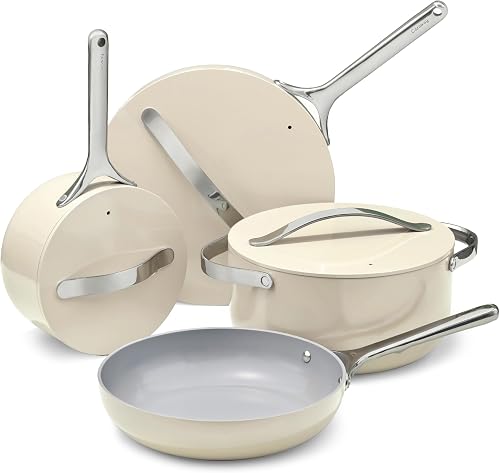
Best overall
Caraway Ceramic Cookware Set
The pretty set that started it all.
Caraway is the set you've seen in every aesthetic kitchen, and for good reason. Its mineral ceramic coating is free of PFAS, PFOA, lead, and cadmium, it heats evenly, and it comes with clever magnetic pan racks and a canvas lid holder. If you want to replace your whole cabinet in one beautiful sweep, start here.
2. Our Place Always Pan 2.0

Best single pan
Our Place Always Pan 2.0
Eight pans in one dreamy shape.
The cult-favorite Always Pan replaces a frying pan, sauté pan, steamer, and more in one PFAS-free ceramic-coated piece. It's a smart first buy if you're not ready for a full set — it handles most weeknight cooking on its own and looks lovely enough to leave on the stove.
3. Lodge Cast Iron Skillet

Best budget
Lodge Cast Iron Skillet
A lifetime pan for the price of takeout.
Nothing beats cast iron for value and longevity. A pre-seasoned Lodge skillet is naturally non-stick once you build up its seasoning, moves from stovetop to oven, and can genuinely last generations. It's the most affordable way to start cooking non-toxic tonight.
4. Cuisinart MultiClad Pro Stainless Skillet

Best stainless steel
Cuisinart MultiClad Pro Stainless Skillet
Zero coatings, built to sear.
If you want a truly coating-free pan, tri-ply stainless steel is the answer — nothing to scratch, flake, or wear off, ever. This Cuisinart MultiClad Pro skillet has an aluminum core sandwiched in stainless for even heating, and it's a workhorse for searing, sauces, and anything cast iron can't do. Not non-stick, so use enough fat and let it preheat.
5. GreenPan Valencia Pro Ceramic Set

Best non-stick feel
GreenPan Valencia Pro Set
The easiest release, minus the PFAS.
GreenPan helped pioneer ceramic non-stick, and the Valencia Pro line delivers that effortless egg-slide feel without PFAS, PFOA, lead, or cadmium. The set is oven-safe to high temperatures and works on induction, making it a versatile, familiar-feeling upgrade for anyone nervous about giving up non-stick convenience.
How to choose your first pan
You don't need to buy an entire set on day one. If you're testing the waters, start with a single versatile piece and expand later:
- Tightest budget? A Lodge cast iron skillet costs little and lasts forever.
- Want one do-it-all pan? The Always Pan covers most weeknight cooking.
- Ready to replace everything? A coordinated set like Caraway is the most satisfying overhaul.
- Zero coatings, period? Go with tri-ply stainless steel like the Cuisinart MultiClad Pro.
Whatever you choose, treat ceramic-coated pans gently — low-to-medium heat, wooden or silicone utensils, and no metal scrubbers — and they'll reward you with years of easy cooking.
Frequently asked questions
What is the safest cookware material?
There's no single "safest" — it depends on how you cook. Cast iron, stainless steel, and 100% ceramic are the most inert (no coatings to wear off). Ceramic-coated pans are also PFAS-free and very user-friendly, but their coating does wear over a few years and will eventually need replacing.
Is ceramic cookware really non-toxic?
Quality ceramic cookware is free of PFAS, PFOA, lead, and cadmium, which is what most people mean by non-toxic. Buy from reputable brands that publish their safety testing, and avoid cheap unbranded pans with vague claims.
How long does ceramic non-stick last?
Typically two to five years with gentle use. To extend it: cook on low-to-medium heat, avoid metal utensils and abrasive scrubbers, and let pans cool before washing.
Why don't you show prices?
Cookware prices — especially sets — change often with sales and bundles. Instead of quoting a figure that might be outdated, we send you to the live listing. Just tap "Check Price on Amazon."
The bottom line
Swapping out scratched non-stick is one of the highest-impact low-tox changes you can make, and you have wonderful options at every budget. Start with a single pan or go all-in on a set — either way, your future self (and your morning eggs) will thank you.