
The case against plastic boards is simple: they scratch, those scratches harbor bacteria, and research has shown that chopping on them releases microplastics into food. Natural materials avoid that entirely. Wood is even naturally antibacterial, and options like titanium and wood-fiber composite give you low-maintenance alternatives that are still free of plastics and coatings.
Below are our six favorites across every material and budget. Prices shift often, so rather than quote numbers, we link you to Amazon to check the current one.
In this guide
- Why plastic boards aren't ideal
- 1. John Boos Maple — best overall
- 2. Teakhaus Teak — best low-maintenance wood
- 3. Greener Chef Bamboo — best budget
- 4. Titanium Cutting Board — best modern
- 5. Epicurean All-In-One — best dishwasher-safe
- 6. Virginia Boys Walnut — best American-made
- Frequently asked questions
Why plastic boards aren't ideal
- Microplastics. Knife cuts shave off plastic particles that can migrate into your food — the whole reason to switch.
- Deep scratches harbor bacteria. Once a plastic board is grooved, it's hard to fully sanitize.
- Wood is naturally antibacterial. Studies have found bacteria survive less well on wood than on plastic.
- Longevity. A quality wood or titanium board can last decades, while plastic boards are replaced constantly.
1. John Boos Maple End-Grain Board

Best overall
John Boos Maple End-Grain Board
A true heirloom for your counter.
John Boos has been making American hardwood boards for over a century, and its thick, end-grain maple block is the gold standard. The end-grain construction is gentle on knife edges and self-healing, so cuts close up over time. Oil it occasionally and it will genuinely last a lifetime — an investment piece worth making.
2. Teakhaus Teak Cutting Board

Best low-maintenance wood
Teakhaus Teak Cutting Board
Naturally water-resistant, easy to love.
Teak is naturally rich in oils, which makes it more water- and warp-resistant than most woods — so it needs less babying than maple. Teakhaus uses responsibly sourced, FSC-certified teak, and the juice-groove carving board is a workhorse for everything from bread to roasts.
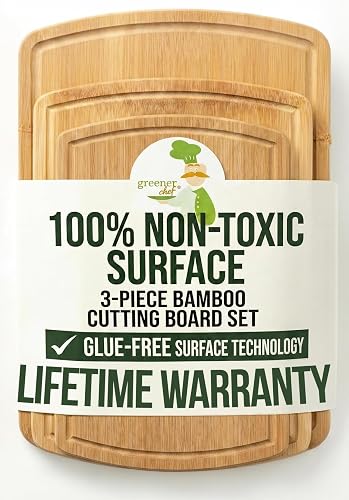
3. Greener Chef Bamboo Board Set
Best budget
Greener Chef Bamboo Board Set
Eco-friendly, glue-free, wallet-friendly.
Bamboo is fast-growing and sustainable, and Greener Chef's set uses a glue-free surface technology — a real plus, since cheap bamboo boards can rely on formaldehyde-based adhesives. You get three handy sizes for prepping different foods, all lightweight and easy to store. A brilliant value.
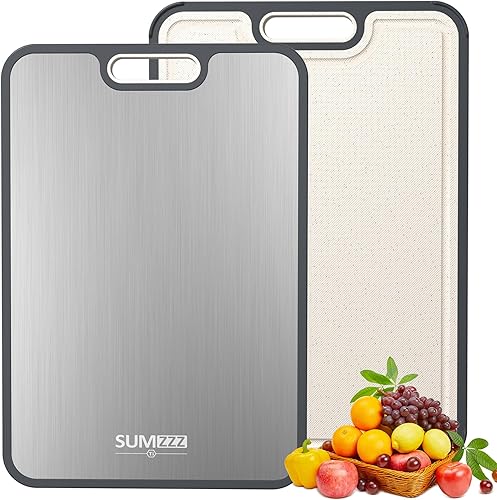
4. Titanium Cutting Board
Best modern
Titanium Cutting Board
Zero microplastics, zero maintenance.
The trendy newcomer for good reason: pure titanium is non-porous, naturally resistant to bacteria, and completely free of plastics, coatings, and the maintenance wood requires. This double-sided, food-grade board won't absorb odors or stains and is dishwasher-safe — a sleek, worry-free option for a low-tox kitchen.
5. Epicurean All-In-One Board

Best dishwasher-safe
Epicurean All-In-One Board
The tidy, dishwasher-safe workhorse.
Made in the USA from a wood-fiber composite, Epicurean boards are non-porous, non-toxic, and — unlike solid wood — completely dishwasher-safe. The All-In-One adds non-slip feet and a juice groove, making it the practical everyday board for busy kitchens that don't want to hand-wash and oil.
6. Virginia Boys Kitchens Walnut Board

Best American-made walnut
Virginia Boys Kitchens Walnut Board
Sustainably made, beautifully dark.
For something a little different from maple, this walnut board brings a rich, dark grain that looks stunning on the counter. Made in the USA from sustainably harvested American black walnut and finished with food-safe oil, it's naturally antibacterial and doubles as an elegant serving and charcuterie board.
Frequently asked questions
Do plastic cutting boards really shed microplastics?
Yes — research published in recent years has measured microplastic particles released into food during normal chopping on plastic boards. The amount varies, but it's a big part of why many people are switching to natural materials.
Is wood or bamboo more hygienic than plastic?
Wood has natural antibacterial properties, and studies have found bacteria survive less well on wood than on scratched plastic. Just hand-wash wood boards, dry them upright, and don't soak them.
How do I care for a wooden cutting board?
Hand-wash with mild soap, dry it standing on edge, and re-oil every few weeks with a food-grade mineral or board oil. Never put solid-wood boards in the dishwasher — for dishwasher convenience, choose Epicurean or titanium.
Are titanium cutting boards safe?
Food-grade titanium is inert, non-porous, and doesn't leach — it's widely used in medical implants for exactly that reason. It won't absorb odors or bacteria and needs no oiling, though it's firmer on knife edges than wood.
Why don't you show prices?
Cutting board prices change often with sales and sizes. Instead of quoting a figure that may be outdated, we link you to the current price — just tap "Check Price on Amazon."
The bottom line
Ditching plastic is one of the simplest kitchen swaps with a real payoff. Choose maple or walnut for a lifetime board, teak or bamboo for lower upkeep, or titanium and Epicurean if you want dishwasher-friendly and maintenance-free. Any of these six will keep microplastics out of tonight's dinner.