
Most of what fills fast-fashion racks is synthetic — polyester, nylon, acrylic — which is essentially plastic spun into thread. Those fabrics can shed microplastics, are often finished with wrinkle-resist or water-repellent treatments (a common source of PFAS, the "forever chemicals"), and are colored with synthetic dyes. Conventional cotton isn't automatically better either: it's one of the most heavily sprayed crops on earth.
Building a lower-tox wardrobe doesn't mean tossing everything you own. It means choosing better as you replace basics — favoring natural fibers, certified-organic cotton, and brands that are transparent about their dyes and finishes. Below are five brands that make that easy, what each does best, and how to shop for non-toxic clothing with confidence.
In this guide
What makes clothing "non-toxic"?
Clothing labeled "non-toxic," "clean," or "conscious" isn't regulated, so it helps to know what actually matters against the skin. We look for:
- Natural fibers. Organic cotton, linen, hemp, wool, and bamboo (as viscose) breathe well and skip the plastic-based synthetics that shed microfibers.
- Organic certification. The GOTS (Global Organic Textile Standard) is the gold standard — it covers the whole supply chain and prohibits toxic dyes, GMOs, and many harmful processing chemicals.
- No "forever chemical" finishes. PFAS often hide in stain-, wrinkle-, and water-resistant treatments. A brand that skips those performance finishes is a good sign.
- Low-impact dyes. Brands that name their dye process (or use undyed/naturally dyed fabric) are being transparent about a big source of textile chemicals.
Every brand below meets several of these, and we tell you exactly where each one stands out.
1. Pact
Best organic cotton basics
Pact
The everyday wardrobe, done cleanly.
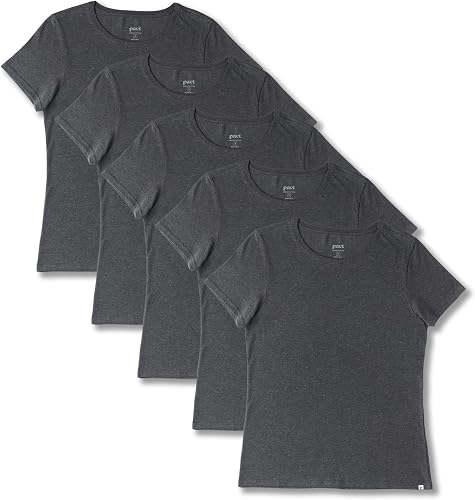
One of the original affordable organic brands, Pact makes its basics from GOTS-certified organic cotton in Fair Trade Certified factories, using low-impact dyes. Their tees, underwear, leggings, and loungewear are the definition of a wear-everything staple — soft, well-fitting, and easy to restock. The multipack crew tees are a perfect first swap for your drawer of everyday shirts.
2. Boody

Best bamboo everyday wear
Boody
Impossibly soft, famously breathable.
Boody makes everyday essentials from organically grown bamboo viscose — a fabric that's silky-soft, breathable, and naturally cooling, which makes it lovely for tops, bras, undies, and sleepwear. Their basics are seam-free and stretchy without the plastic feel of synthetics, and the brand holds itself to high environmental and labor standards.
3. Amazon Aware

Best budget-friendly
Amazon Aware
Organic basics without the splurge.
Amazon's own conscious line makes everyday essentials from Organic Content Standard–certified cotton, in a genuinely inclusive size range and at approachable prices. It's the easiest, most affordable on-ramp to organic-cotton basics — think loungewear tees, tanks, and simple dresses you can add to your cart alongside everything else.
4. prAna
Best for active & everyday
prAna
Organic cotton that moves with you.
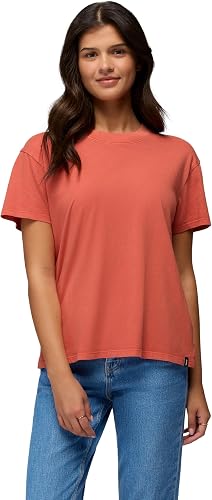
prAna builds much of its line around organic cotton and other responsible fibers, with a focus on versatile, movement-friendly pieces — everyday tees, travel-ready layers, and relaxed activewear. If you want natural fibers that still hold up to yoga, hiking, and busy days, this is a lovely step up from basics into real outfits.
5. Cottonique

Best for sensitive skin
Cottonique
Made for the most reactive skin.
If you have allergies, eczema, or seriously sensitive skin, Cottonique is in a category of its own. Its pieces are made from 100% organic cotton and are deliberately latex-free and spandex-free, so there are no elastic chemicals against your skin. The bras, underwear, and base layers are as gentle and no-frills as clothing gets.
How to build a low-tox wardrobe
You don't need a closet overhaul — you need a smarter next purchase. A few ways to shift your wardrobe cleaner over time:
- Start with what touches you most. Underwear, bras, tees, and sleepwear sit against your skin for hours — swap those to organic cotton or bamboo first.
- Look for GOTS on the label. It's the strongest signal that a fabric is genuinely organic and made without banned chemicals.
- Be wary of "performance" finishes. Stain-proof, wrinkle-free, and water-repellent often mean PFAS. Skip them on everyday clothes.
- Wash new clothes before wearing. A first wash removes surface finishing chemicals and residual dye.
- Buy less, choose well. Natural fibers last, and a smaller wardrobe of pieces you love is the most sustainable move of all.
Frequently asked questions
Is bamboo clothing actually non-toxic?
Bamboo is a fast-growing, low-input plant, but turning it into soft fabric (bamboo viscose) is a chemical process. The key is buying from a brand like Boody that manages that process responsibly in a closed-loop system. The finished fabric is soft, breathable, and free of the finishes you'd worry about — just choose a transparent brand.
What is GOTS certification, and why does it matter?
GOTS (Global Organic Textile Standard) is the leading certification for organic fabric. It verifies the fiber is organically grown and that the entire manufacturing process — dyeing, finishing, labor — meets strict environmental and social criteria, prohibiting toxic dyes, GMOs, and many harmful chemicals. If you see it, you can trust it.
What are PFAS doing in clothing?
PFAS ("forever chemicals") are used to make fabrics stain-, water-, and wrinkle-resistant. They're common in performance and outdoor wear and don't break down easily. The simplest way to avoid them in everyday clothes is to skip those "easy-care" finishes and choose plain natural fibers.
Why don't you show prices?
Clothing prices and sizes on Amazon change constantly, so we link you straight to the current listing rather than quote a number that could be out of date. Just tap "Check Price on Amazon" on any brand above.
The bottom line
A non-toxic wardrobe isn't about perfection — it's about choosing natural fibers and transparent brands the next time you need a basic. Start with the layers closest to your skin, look for organic certification, and skip the "forever chemical" finishes. Any of these five brands is a soft, breathable place to begin.